
Connecting China, US, and Asia-Pacific Capital: Asia Pacific Innovation Center (APIC) Officially Launches in Kuala Lumpur, Building a New Global Business Empowerment Ecosystem

深潮Опубликовано 2025-12-10Обновлено 2025-12-10

Введение

Asia Pacific Innovation Center (APIC) has officially launched in Kuala Lumpur, Malaysia, as a strategic hub connecting China, the U.S., Asia-Pacific, and the Middle East. APIC aims to reshape the regional business landscape by integrating Web3 innovation incubation, global education, and cross-border capital investment. Chaired by Eugene Xiao, the center is built on three core drivers: business enablement (offering end-to-end support for startups and digital transformation), education (partnering with institutions like MIT, UCLA Anderson, and UKM to deliver cutting-edge tech programs), and alliance ecosystems (supported by organizations including DID Alliance and 42X Fund). During the launch, APIC signed six Memoranda of Understanding with key entities such as the Singapore Digital Chamber of Commerce and Malaysia Fujian Chamber of Commerce to advance digital trade, enterprise innovation, youth development, and social responsibility. Positioned as an open and collaborative platform, APIC seeks to foster global connectivity in business, talent, and technology, driving sustainable growth across the Asia-Pacific region.

A new landmark designed to reshape the Asia-Pacific business landscape—the Asia Pacific Innovation Center (APIC)—was officially launched today in Kuala Lumpur, Malaysia. As a key commercial hub connecting China, the United States, the Asia-Pacific region, and the Middle East, the opening of APIC marks the official establishment of a new ecosystem integrating Web3 innovation incubation, global education empowerment, and cross-border capital integration.

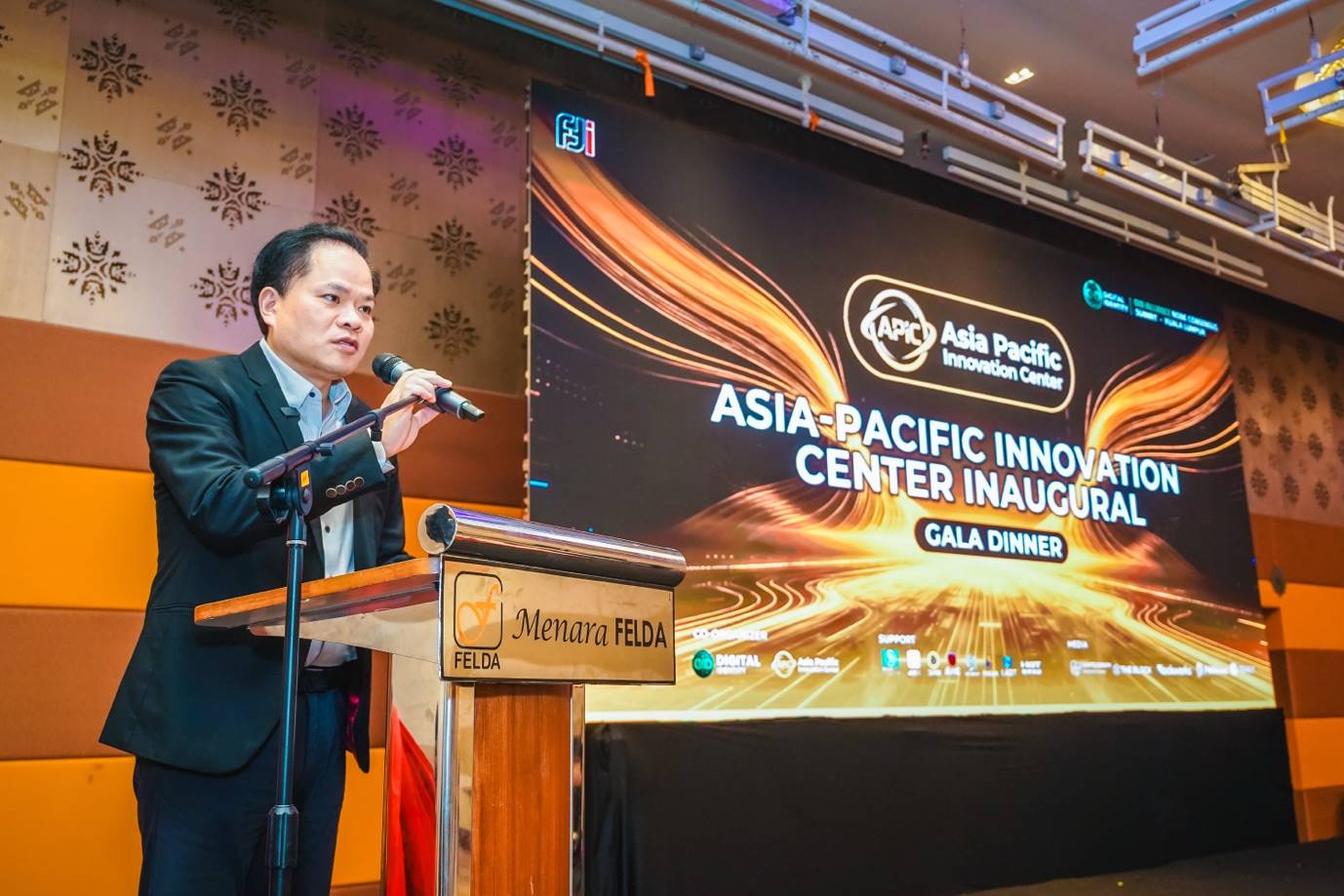
At the opening ceremony held that evening, DID Alliance Chairman and APIC Chairman Eugene Xiao delivered a speech, outlining the center's vision to global partners. Based in the strategic location of Kuala Lumpur, APIC is committed to breaking down geographical barriers by integrating top global financial, technological, and educational resources to provide enterprises with end-to-end support from startup incubation to international expansion.
Three Core Drivers Defining the Future of Business

APIC is not just a physical space but a dynamic resource integration platform. Eugene emphasized in his speech that the center's core competitiveness is condensed into three driving forces:

1. Business-Driven: Building a global end-to-end service system. APIC will serve as a convergence point for Web3 innovation projects and traditional businesses, providing not only one-stop incubation support from technology and compliance to market entry but also assisting traditional enterprises in digital transformation and helping them expand overseas.

2. Education Empowerment: Cultivating future global leaders. The center announced strategic partnerships with top global institutions such as the Massachusetts Institute of Technology (MIT), UCLA Anderson School of Management, and the National University of Malaysia (UKM) to introduce blockchain and cutting-edge technology courses. By issuing authoritative certificates, APIC aims to supply the industry with professionals possessing a global perspective.

3. Alliance Ecosystem: Building a cross-regional strategic network. With the strong support of institutions such as DID Alliance, HotLink, 42X Fund, DPIN, Tang Ren Dao, and HKIT, APIC has established a diverse ecosystem covering finance, technology, and industry, providing members with unparalleled capital support and forward-looking insights.

Six Strategic Signings to Build a Diverse and Win-Win Ecosystem

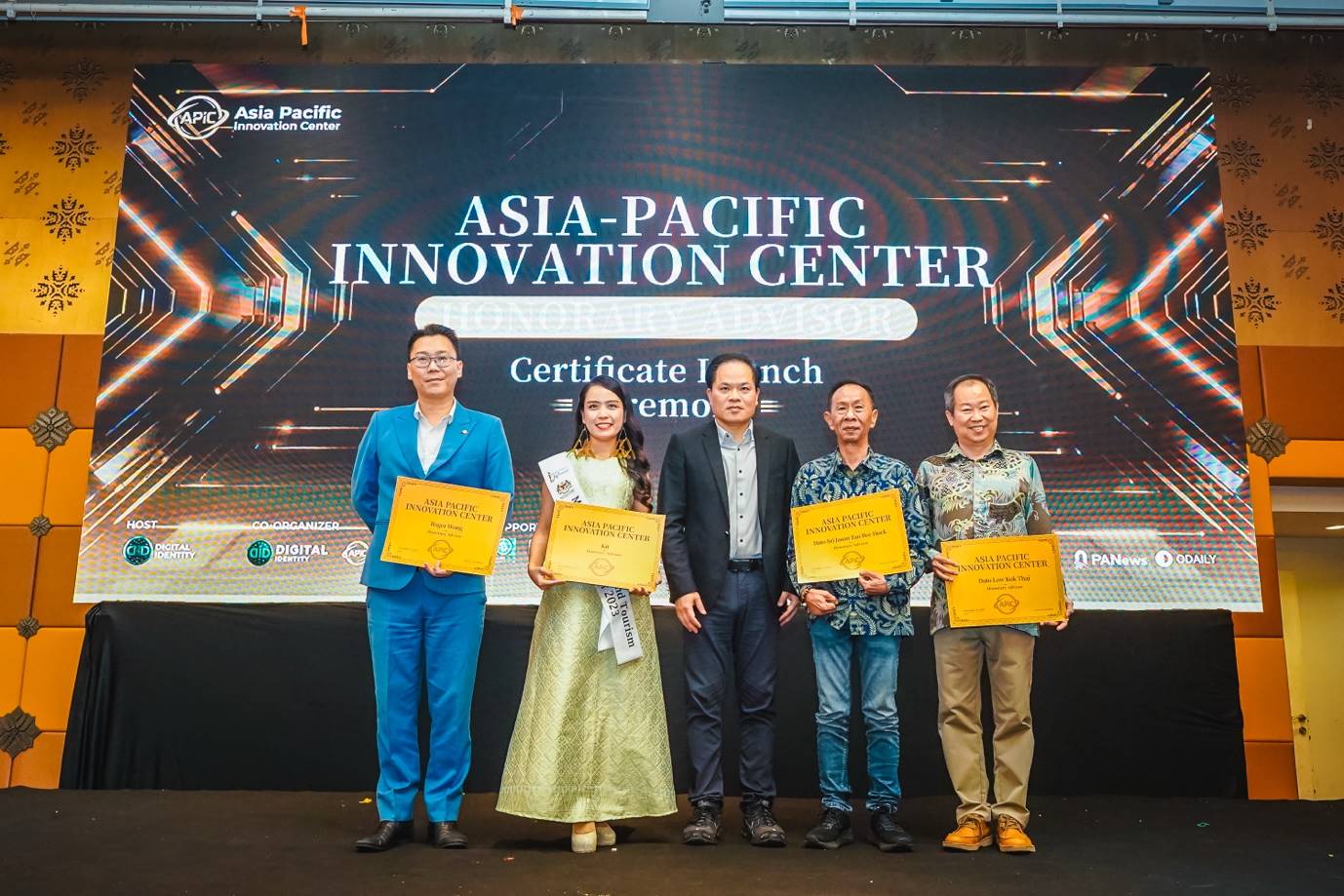
At the inauguration ceremony, the Asia Pacific Innovation Center demonstrated its strong resource cohesion by signing Memoranda of Understanding (MOUs) with six heavyweight institutions, comprehensively deploying in four key areas: digital economy, business innovation, education, and social responsibility:

· Promoting the Digital Economy and Trade Connectivity: APIC signed strategic cooperation agreements with the Singapore Digital Chamber of Commerce (SDCC) and the Malaysia Fujian Chamber of Commerce (MFCCI). The parties will focus on cross-border digital trade, regional tech ecosystem development, and the integration of global resources for Fujian entrepreneurs, jointly exploring new opportunities in the Asia-Pacific digital economy.

· Empowering Enterprise Innovation and Global Expansion: APIC partnered with Regal Global Sdn Bhd. The two parties will engage in in-depth collaboration in business development, high-value project incubation, and corporate cross-border strategic initiatives to help enterprises achieve leapfrog growth.

· Deepening International Education and Youth Development: Focusing on the power of the future, APIC signed cooperation agreements with Globalfront International Sdn Bhd and the World Quanzhou Youth Friendship Association Malaysia Branch. The parties will commit to promoting international academic exchanges, cultivating young leaders, and fostering cross-cultural business cooperation to reserve innovative talent for the Asia-Pacific region.

· Practicing Social Responsibility: APIC established a partnership with the Malaysian community volunteer organization (AKRAM), aiming to empower communities through technology and education, and to drive social welfare and sustainable development.
Looking Ahead: Building an Open Business Ecosystem

Eugene stated in his closing remarks: "The establishment of the Asia Pacific Innovation Center is our new interpretation of the concept of 'connection.' We position ourselves as a strategic hub connecting global capital and markets, but this is not just about connecting commercial interests; it is about the deep integration of talent, wisdom, and opportunities. Looking to the future, APIC will become an important engine driving regional cooperation and innovation. We look forward to joining hands with all partners to build an open, diverse, and win-win business ecosystem, injecting new growth energy into the Asia-Pacific region."

About the Asia Pacific Innovation Center (APIC)

The Asia Pacific Innovation Center (APIC) is an independent business, finance, and trade empowerment platform headquartered in Kuala Lumpur, Malaysia. As a strategic hub connecting capital and markets in China, the United States, the Asia-Pacific region, and the Middle East, APIC is dedicated to facilitating efficient linkages within the global business ecosystem. By integrating Web3 innovation projects, traditional business wisdom, and world-class educational resources, the center provides enterprises, investors, and institutions with technical support, compliance consulting, market expansion, and capital对接 services, helping partners achieve sustainable growth in the complex global market.

Связанные с этим вопросы

QWhat is the Asia Pacific Innovation Center (APIC) and where is it located?

AThe Asia Pacific Innovation Center (APIC) is a strategic commercial hub located in Kuala Lumpur, Malaysia. It is designed to connect capital and markets across China, the US, the Asia-Pacific, and the Middle East, integrating Web3 innovation incubation, global education, and cross-border capital.

QWhat are the three core drivers of APIC's competitiveness as outlined by Chairman Eugene Xiao?

AThe three core drivers are: 1. Business-Driven: Creating a global, full-chain service system for Web3 projects and traditional businesses. 2. Education Empowerment: Partnering with top universities like MIT and UCLA to offer courses and certifications in blockchain and frontier tech. 3. Alliance Ecosystem: Building a cross-regional strategic network with support from institutions like DID Alliance, HotLink, and 42X Fund.

QWhich four key areas did APIC's six strategic Memorandum of Understanding (MOU) signings focus on?

AThe six MOUs focused on four key areas: 1. Promoting the Digital Economy and Trade, 2. Empowering Enterprise Innovation and Global Expansion, 3. Deepening International Education and Youth Development, and 4. Practicing Social Responsibility.

QName two specific academic institutions that APIC has formed strategic educational partnerships with.

AAPIC has formed strategic educational partnerships with the Massachusetts Institute of Technology (MIT) and the UCLA Anderson School of Management.

QWhat is the overarching vision for APIC's role in the region according to its leadership?

AThe overarching vision for APIC is to serve as a strategic hub that deeply integrates talent, wisdom, and opportunity, not just commercial interests. It aims to be an important engine for regional cooperation and innovation, building an open, diverse, and win-win business ecosystem to inject new growth energy into the Asia-Pacific region.

Похожее

Analyst: Ripple (XRP) Price Could Rise from $2 to $10 in Less Than a Year

Cryptocurrency analyst Chad Steingraber predicts that XRP could surge from $2 to $10 in less than a year, driven by strong institutional demand through recently launched exchange-traded funds (ETFs). Key factors supporting this outlook include the rapid accumulation of XRP by ETFs. Data from SoSoValue shows that XRP-focused ETFs have absorbed over 506 million XRP (worth approximately $506 million) in under a month since their launch in November. This represents about 0.74% of XRP’s circulating supply—a significant level of adoption in a short time. Additionally, the Bitwise Crypto 10 Fund (BITW), which holds XRP as 5% of its portfolio, began trading with over $1.25 billion in assets. Steingraber draws parallels to Bitcoin’s post-ETF performance, suggesting that continued ETF inflows could propel XRP toward a 400% price increase by 2026. Technically, XRP’s chart patterns support a bullish outlook. On weekly charts, the token has broken out of a multi-month symmetrical triangle—a pattern often indicating a strong trend continuation. The measured move from this pattern suggests a potential rise to the $14–$15 range. A second pattern, a bull flag observed on higher timeframes, also points to a target near $14–$15, reinforcing the analyst’s prediction. The article includes standard disclaimers that it is not investment advice and all trading carries risk.

cointelegraph_中文2 мин. назад

Analyst: Ripple (XRP) Price Could Rise from $2 to $10 in Less Than a Year

cointelegraph_中文2 мин. назад

Bitcoin (BTC) Year-End Push to $100,000 Largely Depends on Fed Policy Pivot Outcome

Bitcoin's potential to reach $100,000 by year-end is heavily dependent on the outcome of the U.S. Federal Reserve's policy shift. The recent 4% drop in Bitcoin, bringing it to a low of $88,140, highlights the market's sensitivity to monetary policy and credit risk. A key factor is the Fed's transition away from quantitative tightening, which concluded on December 1. Over the past six months, this policy has removed $1.36 trillion in liquidity from the financial system. The market is now pricing in a high probability of rate cuts, with expectations for three reductions by September 2026. Lower interest rates and increased systemic liquidity reduce the appeal of fixed-income assets, as seen with money market funds hitting a record $8 trillion. Simultaneously, rising credit risk in the tech sector, exemplified by Oracle's soaring debt protection costs, is pushing investors toward scarce assets like Bitcoin. Oracle, with $105 billion in debt, relies heavily on AI-driven revenues, and the market's growing concern over the sustainability of such debt-fueled growth is creating structural unease. This combination of the Fed's policy pivot, diminishing fixed-income appeal, and tech sector credit risk sets the stage for capital rotation into Bitcoin. The path to $100,000 appears clearer as these macroeconomic and credit dynamics converge.

cointelegraph_中文9 мин. назад

Bitcoin (BTC) Year-End Push to $100,000 Largely Depends on Fed Policy Pivot Outcome

cointelegraph_中文9 мин. назад

The New Frontier of Privacy Coins: Technology, Prevention, and Regulatory Game

Privacy coins are at a critical juncture, shaped by technological evolution, regulatory pressure, and judicial decisions. In 2024–2025, court rulings, law enforcement actions, and technical adjustments are redefining the boundaries of this sector. Key developments include debates over whether decentralized mixing tools constitute sanctionable property, cross-border crackdowns on anonymous transaction services in Europe and the U.S., and privacy-focused projects adopting more compliant technical designs. Judicially, U.S. courts have issued influential rulings questioning whether immutable smart contracts fit traditional legal frameworks. Meanwhile, European authorities continue to target mixing services accused of facilitating money laundering. Technologically, some privacy projects are incorporating optional privacy features, flexible fee mechanisms, and improved audit interfaces to enhance usability and reduce regulatory friction. Macro-trends show countries advancing comprehensive crypto regulatory frameworks covering custody, trading, stablecoins, and anti-money laundering (AML) standards. Regulatory bodies increasingly demand that high-privacy tools provide verifiable audit trails or compliance-friendly modes to access legal financial services. Looking ahead, three main trajectories are emerging: continued legal clarification around smart contracts and mixer liabilities, a shift in privacy protocols from absolute anonymity toward optional privacy with auditability, and a market reassessment of the regulatory risk associated with privacy assets. This is causing a strategic split within the industry—some communities insist on strong privacy for niche demands, while others pursue “compliance-friendly privacy” models like enterprise-grade confidential transactions or auditable privacy pools. In essence, privacy coins are transitioning from pursuing maximum anonymity to seeking sustainable existence within regulatory boundaries. Future judicial rulings, policies, and protocol upgrades will determine which projects survive market and legal pressures. Those offering meaningful privacy while maintaining legal compliance are most likely to endure.

cointelegraph_中文15 мин. назад

The New Frontier of Privacy Coins: Technology, Prevention, and Regulatory Game

cointelegraph_中文15 мин. назад

Champion! Huobi HTX Tops the Industry with $583.7M Net Asset Inflow Over the Past 30 Days

In the competitive crypto industry, fund flows reveal true user trust. According to Defillama data on December 5, Huobi HTX recorded a net inflow of $583.7M over the past 30 days, ranking first among all centralized exchanges (CEXs). This reflects growing user confidence in the platform’s security, transparency, and product offerings. Huobi HTX has maintained steady growth in total assets and spot trading volume, forming a positive cycle of asset safety, user growth, and capital inflow. Key factors behind this performance include enhanced asset proof mechanisms—with 38 consecutive months of published Merkle Tree Proof of Reserves (PoR) and 100%+ reserve ratios for major assets—alongside improved C2C trading features such as a "100% compensation" policy and a streamlined user experience. The platform’s earn products, including Huobi Earn, also saw significant growth, with increases in both user participation and asset deposits for tokens like USDD, ETH, and TRX. Users are increasingly choosing Huobi HTX for its reliable yields, ease of use, and strong security measures during market volatility. As a long-established exchange founded in 2013, Huobi HTX has strengthened its compliance and risk management frameworks, reinforcing its reputation for safety and transparency. The net inflow milestone underscores its position as a trusted platform where users choose to securely store and grow their digital assets.

深潮36 мин. назад

Champion! Huobi HTX Tops the Industry with $583.7M Net Asset Inflow Over the Past 30 Days

深潮36 мин. назад

Торговля

Спот
Фьючерсы
活动图片